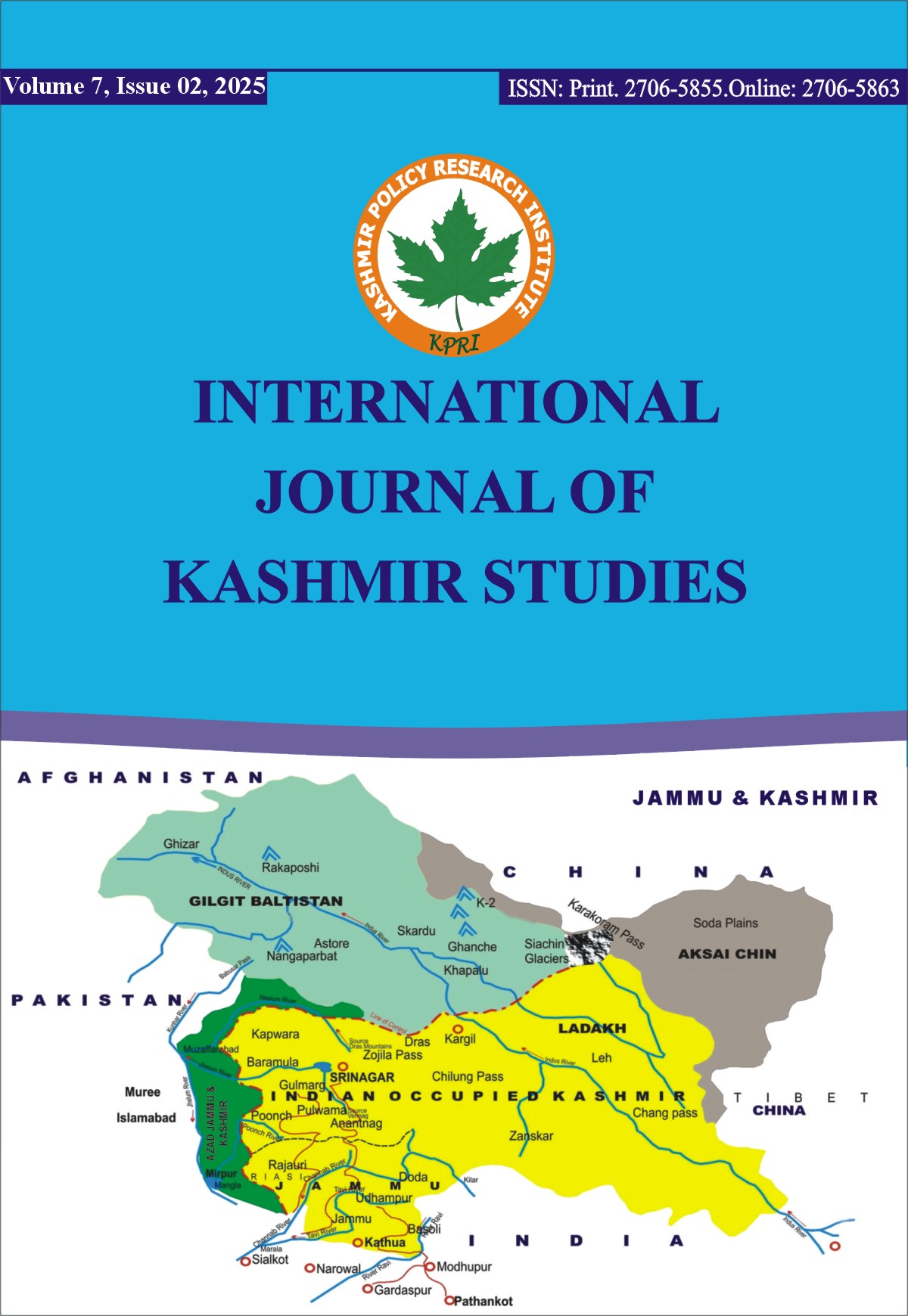
The Kashmir Conflict: Geography, Politics, and United Nations Intervention
Keywords:
Kashmir conflict, Self-determination,Abstract
The Jammu and Kashmir dispute is one of the longest running and most complex territorial disputes in modern international relations. Rooted in the legacies of British colonialism, disputed sovereignty and competing nationalisms, the conflict has been shaped to an extraordinary degree by the region's peculiar geography, demography, and early international intervention through the United Nations Security Council (UNSC). The partition of British India in 1947 introduced a new element of uncertainty in princely states like that of Jammu and Kashmir and the stage was set for one of the longest running conflicts in South Asia. While there were international attempts at settlement primarily through the UNSC and the United Nations Commission for India and Pakistan (UNCIP) that offered the normative frameworks for peaceful settlement and demilitarization and for self-determination, such efforts were fraught with structural limitations, political contestation and the geographical and strategic realities of the region.
Downloads